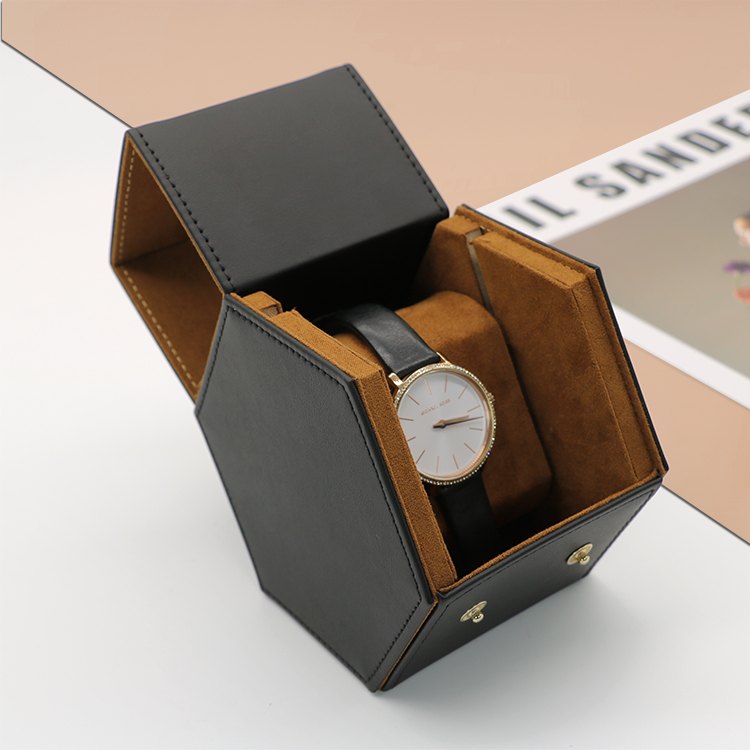

A reliable watch box starts with a measured watch-and-insert system, not an attractive shell. Buyers should document the watch envelope, intended display position, allowable movement, strap condition, and accessory load before requesting a quote. That brief turns watch packaging box design from a styling exercise into a repeatable fit decision that can be approved at sample stage and checked again during production.
The Watch Sets the Fit Brief
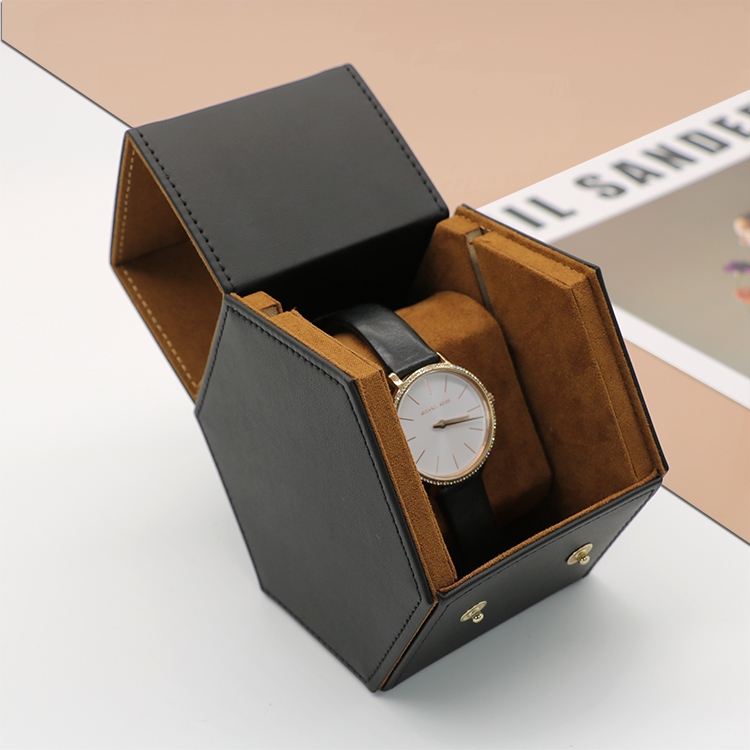
The watch determines the cavity, support points, and removal path. In watch packaging design, a box drawn around a nominal case diameter can still fail when the crown, lugs, bracelet clasp, or a thick strap touches the insert. Measure the complete product in its packed condition and state whether the strap will be open, closed around a pillow, or laid flat.
Record the Product Envelope
The product envelope should capture maximum width, total length, case thickness, crown projection, and the largest strap or bracelet condition in the range. When several watch models share one box, record the smallest and largest configurations rather than approving the insert around one convenient sample.
Define the Presentation Position
The display position should be described in observable terms. State the dial angle, logo orientation, crown direction, strap path, and the point at which a buyer should be able to lift the watch without pulling on the crown or buckle. These decisions prevent the supplier from solving fit in a way that changes the intended unboxing view.
The RFQ pack should include:
- one production-representative watch or a dimensioned 3D file;
- photos of the exact display position and removal motion;
- the heaviest and lightest product variants that will share the insert;
- any warranty card, manual, spare strap, tool, or charging accessory;
- the master-carton and distribution route assumptions used for testing.
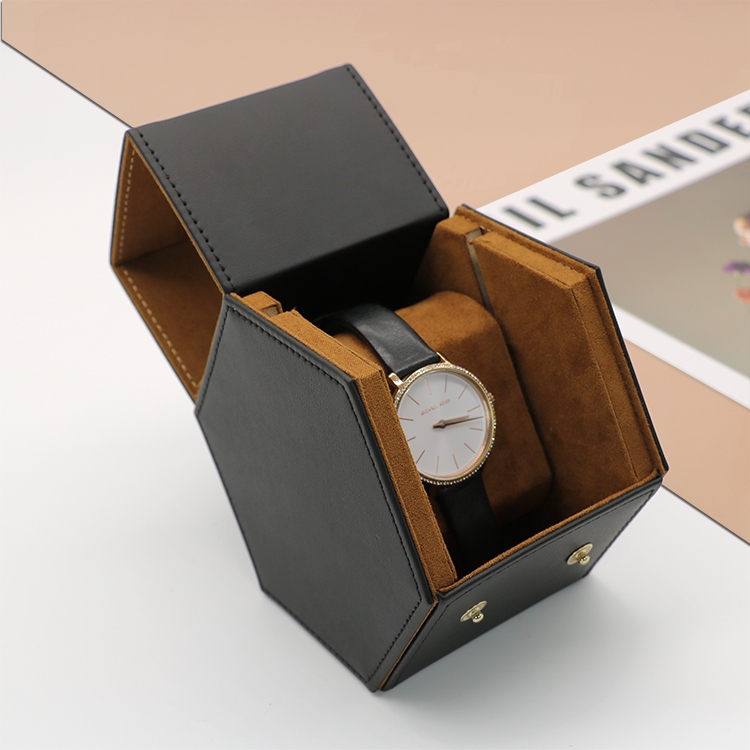
Insert Geometry Controls Movement
An insert should restrain the watch without creating pressure points on the crystal, crown, polished case, or strap surface. The safest acceptance language describes the result: the watch stays centered during normal handling, does not rattle, and can be removed without visible rubbing, deep compression, or forced bending.
Control Clearance Without Over-Compression
Clearance must be checked with the real surface finish and final insert covering. A cavity that works in bare foam can tighten after fabric, paper, or a wrapped edge is added. For custom watch box packaging, approve both the dimensional fit and the finished contact surfaces, then retain the signed sample as the production reference.
Treat Straps and Accessories as Separate Loads
Straps behave differently from watch heads. Leather can take a set when bent too tightly, a bracelet can mark a soft lining, and a loose tool can contact the case in transit. Give each accessory a dedicated pocket or controlled zone. If one insert must serve multiple variants, require the supplier to show how unused space is managed rather than accepting a vague universal-fit claim.
Build a Sample Approval Matrix
A sample matrix prevents subjective comments such as “too loose” or “looks fine.” Each approval point should have a test method, a rejection signal, and a record that purchasing and quality teams can reuse.
| Approval point | How to check | Reject when | Record |
| Centering | Place and remove the watch three times | Dial shifts or watch rests against a hard edge | Top and side photos |
| Retention | Handle the closed box in agreed orientations | Watch or accessory changes position | Short handling video |
| Contato | Inspect crystal, case, crown, and strap | Abrasion, pressure mark, or exposed hard surface appears | Close-up photos |
| Removal | Use the intended finger access | Watch requires pulling on crown, buckle, or strap | Approval note |
| Repeatability | Compare two or more samples | Fit changes materially between samples | Measurement sheet |
Match Transit Tests to the Distribution Route
Retail presentation testing and transport testing answer different questions. A fit check shows whether the insert controls the watch inside the presentation box; it does not prove the packed shipment will survive parcel handling, pallet movement, or international distribution.
Select a procedure that reflects the actual packed-product weight and distribution route, and test the complete product-package combination. Do not call one informal drop a universal transit qualification. Record the procedure, conditioning, pack configuration, and post-test inspection criteria in the approval file.
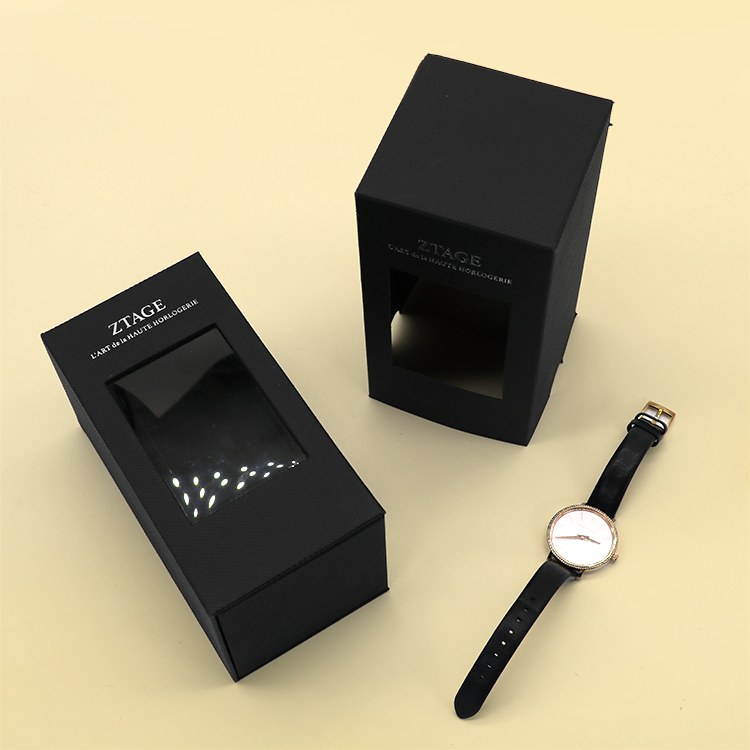
Turn the Sample Into Production Controls
Production control should translate the approved sample into checkpoints that operators can see and inspectors can verify. Useful controls include cavity position, insert seating, covering adhesion, window alignment, closure action, logo placement, and the presence of every accessory. A tolerance belongs only where the brand and supplier can measure it consistently.
JERL Packaging supports custom watch packaging with PU and wooden watch box formats, custom-logo options, and one-stop design, production, and delivery support. That range makes it possible to develop luxury watch packaging boxes around a signed fit brief while keeping the watch, insert, and outer structure inside one approval workflow. Buyers should still confirm the exact material, finish, MOQ, timing, and test plan for the selected model before ordering.
Practical Takeaway
The strongest watch-box approval is a controlled comparison between the measured product, the finished insert, and the retained sample. Define fit as observable performance, separate accessories, test the complete shipment for its real route, and carry the approved criteria into production inspection. For a project-specific insert and sampling plan, contact the JERL Packaging team with the watch range, display position, target quantity, and distribution route.
Perguntas frequentes
What measurements are needed for a watch box insert?
Measure the maximum case width, crown projection, case thickness, total packed length, and the largest strap or bracelet condition. Add the intended display position and any accessory dimensions because the product envelope is more useful than a single case diameter.
Should one insert fit several watch models?
One insert can serve a range only when the smallest and largest models both pass retention, contact, and removal checks. Approve the extremes and document how unused space is controlled.
How tight should a watch pillow be?
It should hold the watch in the approved position without forcing the strap, marking the lining, or loading the crystal, case, crown, or clasp. Use the finished pillow covering during approval.
Is a sample fit check enough for shipping approval?
No. The fit check addresses movement inside the presentation box. Transit approval should use the complete packed product and a procedure selected for the actual distribution environment.
What should be retained after sample approval?
Retain the signed physical sample, product variant list, measurements, photos, handling or test record, artwork version, and written rejection criteria. These become the reference set for production and final inspection.