Think about a ring the customer actually pays for, and the box is doing more of the selling than the price tag. Buyers open a dozen jewelry packages in a year and keep a mental note of the ones that felt deliberate. In this category, though, the box still tends to get decided last, as a leftover line item rather than as part of the design.
The job the package quietly does
Strip it down and a jewelry package has to pull off two things at once. Hold the piece so it doesn’t shift, scratch or rattle through opening, gifting and resale. Then, in the few seconds a customer has the lid in hand, it has to say something about the brand.
Miss the first job and the product arrives damaged; miss the second and it arrives unremarkable. Personalized Jewellery Packaging exists because the two jobs only get solved together, when the structure is cut to the piece and the surface is chosen to match how that piece is positioned.
For a wholesale program that logic sits at the front of the brief, not the back. Name the jewelry type, the heaviest component and the unboxing moment, and only then touch materials. That’s how JERL Packaging approaches a fitted structure: the box is built around the piece, and the finishes are layered on last. A well-specified personalized jewelry box behaves like a component, not a decorative afterthought.
What’s actually moving in the category
A few currents are doing more to shape the category than the rest. They’re not all the same story, and treating them as one is the most common mistake. The table keeps them separate.
| Tendência | What it changes | Wholesale implication |
| Personalização | Custom logo, engraving, monogram and color | Turns a generic SKU into a branded presentation |
| Sustentabilidade | Recycled or lower-impact board and inks | Backs an eco story buyers ask to verify |
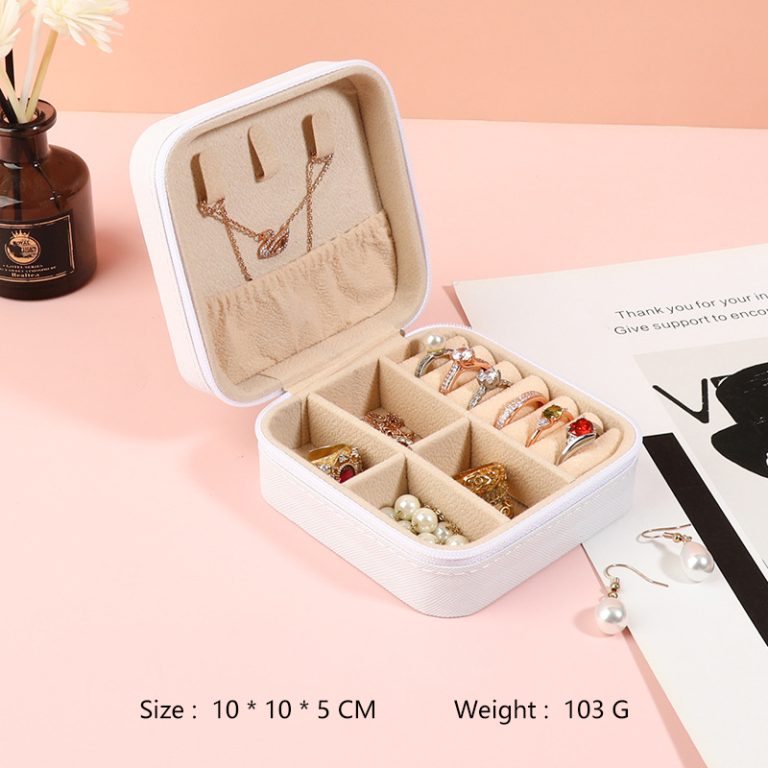
| Travel-ready design | Zip, drawer or clamshell closure | Covers gifting and travel, not just the counter |
| Magnetic and rigid build | Rigid base, secure magnetic or hinge closure | Premium feel without fragile lids |
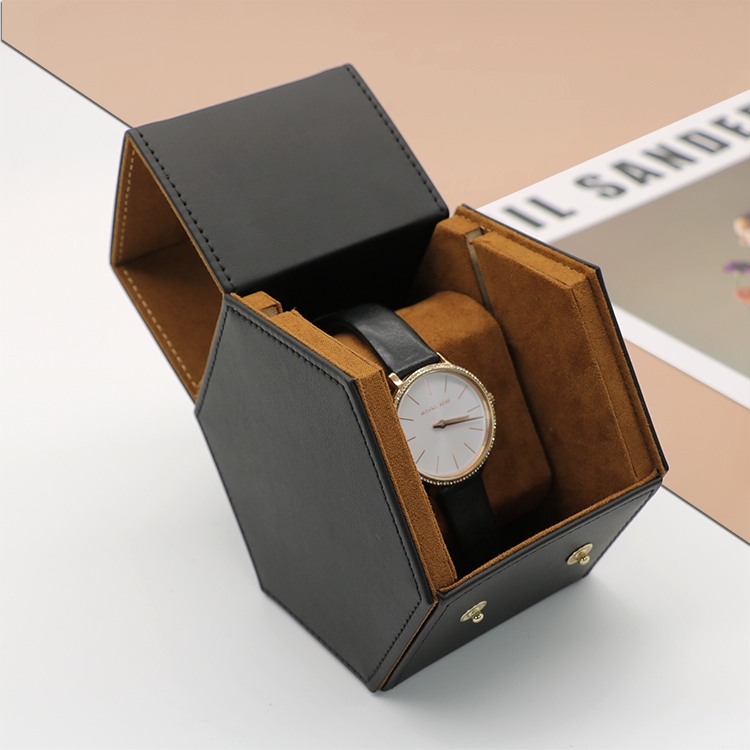
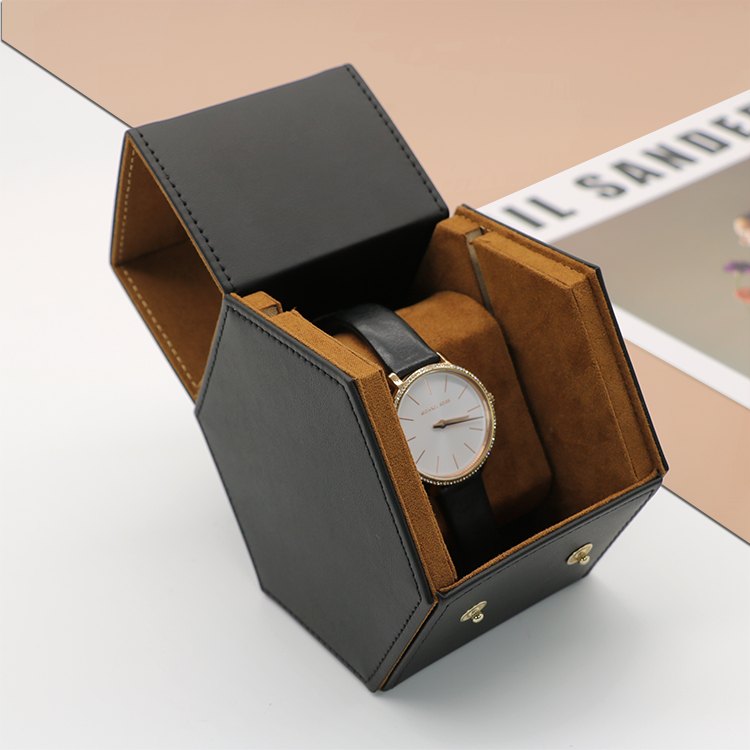
| Velvet and soft linings | Plush or fabric lining for delicate pieces | Protects finishes, lifts perceived value |
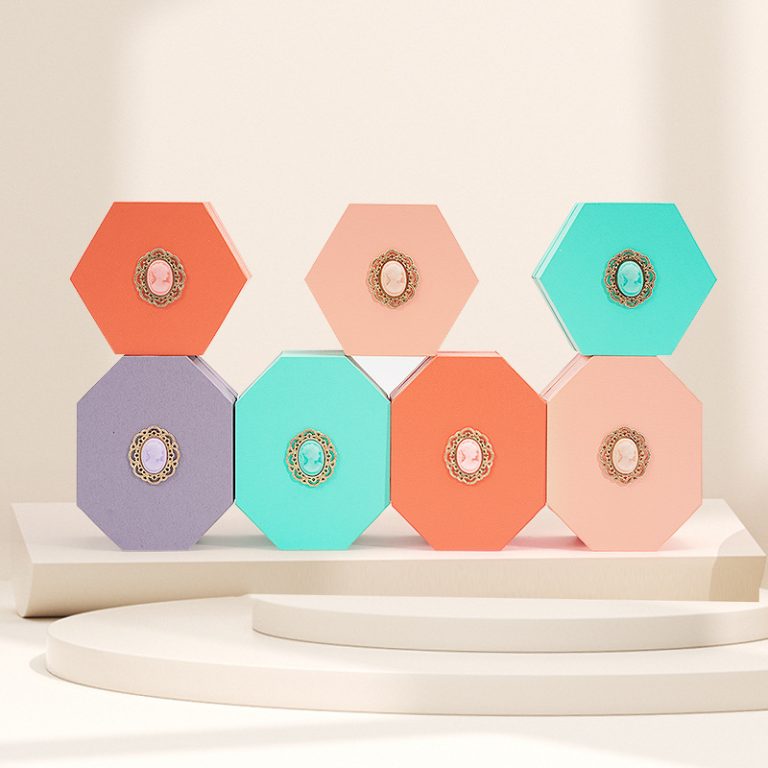
Personalization has quietly become the baseline. A custom logo or engraving is what makes a shelf of identical SKUs read as one particular brand. Sustainability has gotten harder too: buyers no longer accept the phrase on the box, they want the documentation behind it. The brands that hold up best are the ones who can back the story, not just print it.
There is a quieter payoff. A protective, on-brand box photographs better for online sales and unboxing content without any extra styling, so the package does its job at the point of sale and a second time in the customer’s camera roll.
Materials that keep a box from feeling cheap
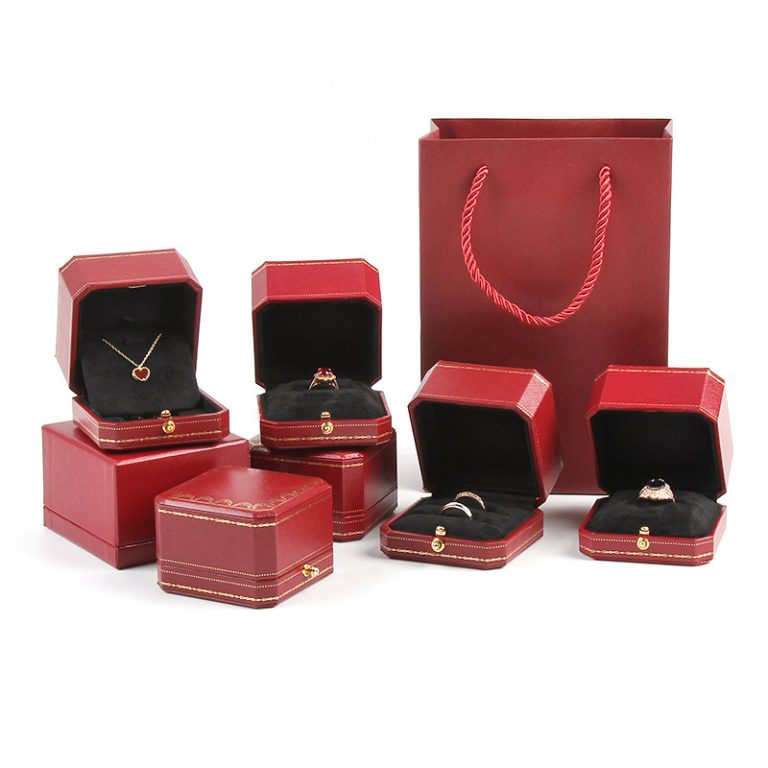
Here’s the thing about finish. The customer remembers how the surface looks, but it’s the board and the lining that protect the stone. A velvet-lined or PU-leather build suits high-end and bridal pieces, because it carries a weight and softness that plain board simply doesn’t.
For volume lines the math leans the other way. Small Cardboard Jewelry Boxes keep the unit cost down without the box reading as cheap. A recycled board with clean printing can carry the same graphics as a traditional rigid box, so sustainable jewelry packaging doesn’t have to look like a compromise. Pick the material to the price point of the piece and confirm it against whatever that market demands.
One detail is worth pinning down early. Where a market expects a certified fibre, you can specify an FSC-aligned paper option without redoing the design, so it never becomes a late surprise on the production floor.
The box is only one part of the system
A box doesn’t live alone. Small Packaging Bags for Jewelry and other custom jewelry bags stretch the same design language into travel, gifting and on-the-go protection, where a secure closure and a compact shape matter more than a rigid base ever will.
Carry one color, one logo and one finish across boxes, pouches and bags and the packaging becomes recognizable before the logo is read. In a bulk program that pays off twice: the presentation stays consistent across sizes, and a proven design keeps the per-unit cost controlled.
The points that decide the outcome
| Check point | Why it matters | What to confirm |
| Structure fit | A loose or cramped fit fails the job | Piece size, heaviest component, orientation |
| Closure | Drives protection and reuse | Magnetic, hinge, zip or drawer |
| Lining | Protects and signals value | Velvet, suede, fabric or none |
| Print and finish | Carries the brand | Logo placement, foil, embossing |
| Quantity | Controls cost and waste | Order size, packing for the boxes |
How to brief a supplier so it lands
The outcome is usually settled at the brief. Give the supplier the piece type and size, the finish you want, any personalization, the quantity, and the market the boxes are headed to. Vague input leads to a generic box, and a generic box struggles to carry a specific brand.
A supplier with a defined workflow turns that brief into a quote, a sample and a production run, with a real chance to adjust fit and finish before the full run. JERL Packaging’s standard path runs from design drafts to quote, prototype approval, then mass production and delivery. The point is to stop guessing at the final look.
Where to point the next decision
Trends in custom jewelry packaging work best as a menu, not a recipe. Match the finish to how the piece is positioned, add personalization only where the brand gains from it, and pick a material story the target market will take seriously.
A package that protects the stone and still carries the brand’s values lasts longer than one chosen around a single trend. When it comes to comparing structure, lining and personalization for a specific line, the practical next step is to look over the relevant box categories and a sample.
Perguntas frequentes
What is sustainable jewelry packaging?
Sustainable jewelry packaging uses lower-impact materials such as recycled or responsibly sourced board and inks, designed so the box still protects the piece and keeps its premium feel.
Can custom jewelry boxes be personalized in small quantities?
Yes. Personalized jewellery packaging can include a custom logo, engraving or color, and the process can start with a prototype so the fit and finish are confirmed before a larger run.
What materials are used for premium jewelry boxes?
Premium lines commonly use velvet, suede or PU-leather linings with rigid or paper structures, chosen to match the piece’s price point and its protection needs.
How do travel jewelry boxes differ from retail boxes?
Travel designs emphasize a secure closure and a compact, protective form for moving pieces, while retail boxes focus more on shelf presentation and the unboxing moment.
What should a jewelry packaging brief include?
Include the piece type and size, the desired finish and personalization, the closure preference, the quantity, and the destination market so the supplier can specify structure, lining and material.