
A rigid paper watch box works when the outer shell, insert, closure, and shipping route are engineered as one system. Buyers often approve the exterior first, then discover that a crown rubs, a bracelet shifts, or a cushion distorts the display. A better process starts with the watch geometry and measurable movement limits, then adds the brand experience around that fit.
Define the Watch Before Designing the Box
Create a product envelope using the largest case diameter and thickness, longest lug-to-lug dimension, crown and pusher projection, bracelet or strap width, clasp thickness, and total weight. Include the protected SKU mix, not just the sample nearest at hand. A shared outer box can fail if one metal bracelet is heavier or one crown sits closer to a wall.
The insert needs its own specification. Record cushion diameter, compression range, slot width, retention method, and clearance around the dial, crown, and clasp. For automatic watches, confirm that pressure is not transferred through the crown. For polished bracelets, identify every surface that could rub during vibration or repeated opening.
Rigid Paper Structures for Each Route
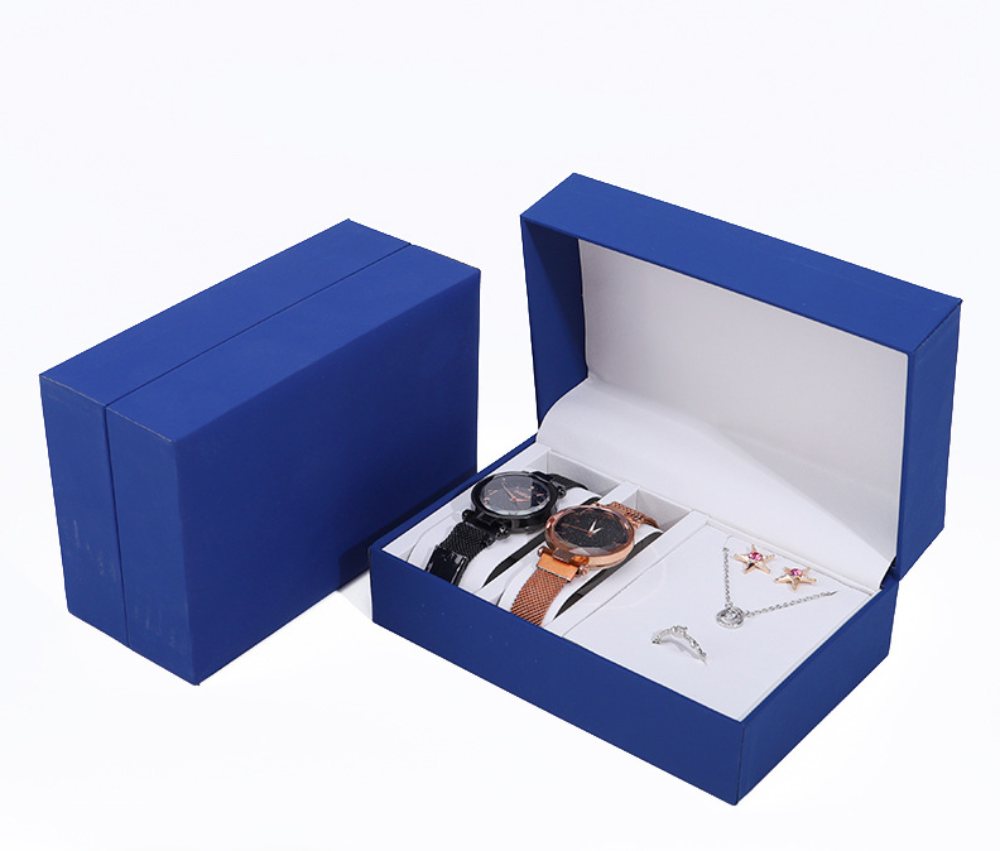
A two-piece lid-and-base box offers a familiar reveal and simple tooling. A hinged book-style format controls the lid and can support a premium opening sequence. A drawer adds theatre but creates more sliding surfaces and tight tolerance points. A magnetic closure feels decisive, yet magnets and added wraps complicate material separation and must be positioned consistently.
Effective watch packaging box design connects that structure to the insert and the distribution path. Board thickness alone does not predict performance. Corner construction, wrap adhesion, lid depth, opening clearance, and the way the insert supports the watch all influence crush resistance, scuffing, and presentation after transit.
Specify where the box is sold and how it travels: protected retail replenishment, direct-to-consumer parcel, marketplace fulfillment, or presentation inside a larger gift set. Ecommerce exposes the unit to repeated drops and vibration. Retail creates handling and shelf demands. The chosen structure should be tested in the final shipper, not judged only on a meeting-room table.
Approve Insert Fit With Observable Criteria
Fit approval should be a pass-or-fail exercise. Close the box, shake it in each orientation, reopen it, and inspect the dial, bezel, crown, strap, clasp, cushion, and inner lining. The watch should remain centered, release without excessive force, and show no new marks. Repeat the check with the smallest and largest intended SKU.
| Fit Check | Pass Condition | Reason |
|---|---|---|
| Centered display | Watch returns in presentation position | Protects first impression |
| Crown clearance | No contact when closed or shaken | Avoids point loading and scuffs |
| Cushion retention | Secure without over-compressing the strap | Balances hold and easy removal |
| Clasp and bracelet | No rub points or loose movement | Protects polished surfaces |
| Lid clearance | No dial or bezel contact | Prevents cosmetic damage |
For a multi-SKU watch packaging box, document the approved range rather than calling the cavity universal. If a common cushion cannot hold both small leather straps and large bracelets, use controlled insert variants. That adds inventory, but it is safer than an undefined fit that transfers damage and returns to the brand.
Use Finish to Support Recognition and Handling
The wrap and finish should survive the route and communicate the product tier. Dark uncoated papers can show fingerprints or edge wear; high-gloss films can reveal scratches; heavy foil coverage needs tight registration. Request a production-intent sample with the actual paper, print method, logo treatment, lining color, and closure hardware before approving photography.
JERL Packaging offers customization in materials, size, structure, color, graphics, logo, and surface finish. Its stated quality process includes raw-material inspection, checks during production, and 100% final inspection. Convert those broad capabilities into a signed control sample plus tolerances for wrap alignment, color, logo position, lid fit, insert dimensions, cleanliness, and pack-out.
Compare Paper With Leather and Wood Deliberately
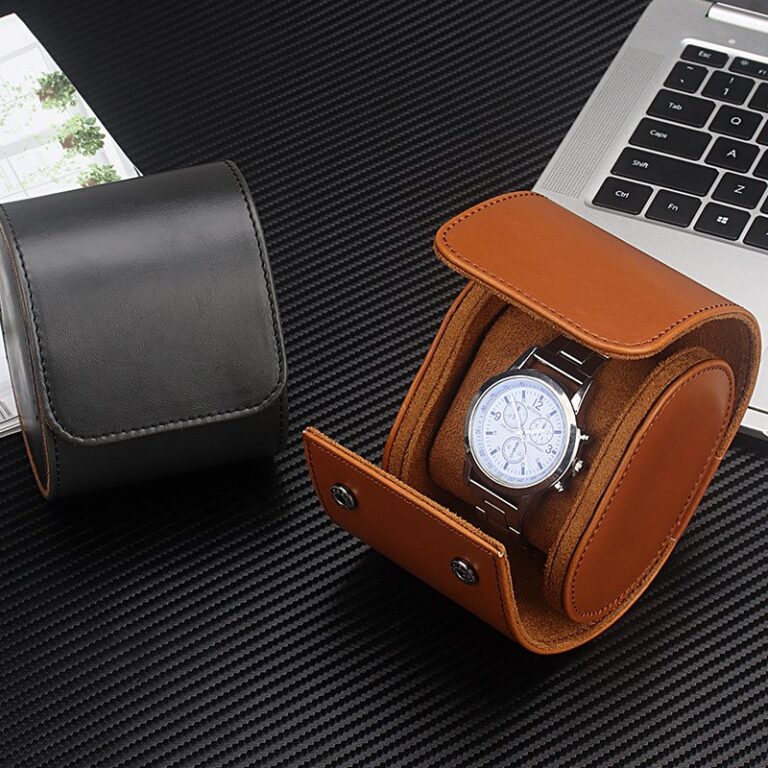
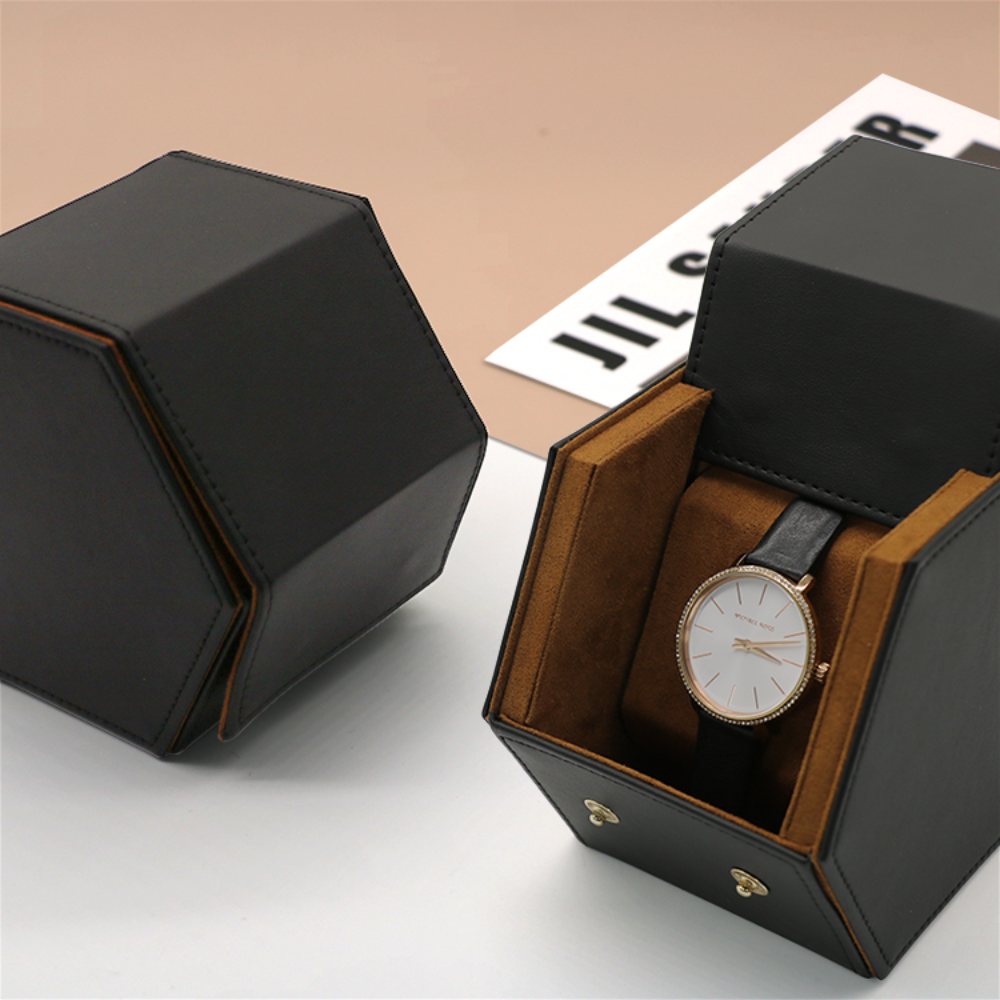
Rigid paper is usually the strongest choice when a brand wants high-quality printing, scalable color systems, efficient nesting, and a familiar paper-based presentation. Wood brings weight and permanence but increases cost and freight. PU or leather-covered formats can feel tactile and suit travel cases, yet buyers must define the covering, stitching, lining, and care expectations.
A leather box for watches is therefore a useful benchmark, not the default upgrade. Compare materials against the same scorecard: product protection, brand fit, unit cost, minimum order, freight, repair or reuse potential, and end-of-life communication. A well-engineered paper box can outperform a heavier material when the insert and route are better controlled.
Validate the Packed System Before Production
Start with functional prototypes, then move to production-intent samples. Test opening cycles, insert retention, surface rub, hinge or closure repeatability, and packed-product drops. For parcel delivery, ISTA 3A is a recognized general-simulation procedure for packaged products weighing 70 kilograms or less and includes conditioning, vibration, and shock sequences. A qualified laboratory should select the exact protocol.
Build the Purchase Specification Around Acceptance
The final specification should include drawings, material descriptions, board and wrap requirements, approved color references, logo process, insert dimensions and density, closure details, finished tolerances, cleanliness criteria, unit packing, master-carton limits, labeling, and inspection sampling. State which physical sample controls color and workmanship when the drawing cannot communicate appearance.
JERL Packaging was established in 2011 and combines design, engineering, manufacturing, and sales. Its custom sample window is generally three to five days, while custom production is typically seven to fifteen days after sample approval, depending on complexity and quantity. Buyers should add time for watch-fit trials, transit testing, revisions, and international freight.
Successful custom watch box packaging is not a decorated container; it is an approved protection system with a controlled reveal. To assess a watch range and distribution route, contact JERL Packaging with product dimensions, quantities, target markets, finish references, and required delivery dates.
Häufig gestellte Fragen
What information is needed to size a rigid watch box?
Provide case diameter and thickness, lug-to-lug length, crown projection, strap or bracelet width, clasp thickness, total weight, required orientation, and the smallest and largest SKU. Physical watches or accurate 3D data reduce fit assumptions.
Which rigid paper box style is best for watches?
There is no universal best style. Lid-and-base boxes are straightforward, hinged boxes control the reveal, drawers add movement, and magnetic formats create a positive close. Choose according to product weight, route, opening behavior, target cost, and material-separation goals.
How tight should the watch cushion be?
It should retain the watch through handling without over-compressing the strap, stressing the clasp, or making removal awkward. Approve a defined compression range with the smallest and largest intended products, then control that range in production.
Should the retail box be tested inside its shipping carton?
Yes. The retail box, product, protective materials, unit wrap, and shipper interact. Testing the presentation box alone misses carton compression, vibration, repeated drops, and abrasion that can occur in the actual distribution system.
Can one insert fit an entire watch collection?
Sometimes, but only within an approved dimensional range. A cushion that works for a slim leather strap may not control a heavy bracelet. Validate every intended SKU and create controlled insert variants when the common solution cannot meet movement and clearance criteria.


