
A new flavor can expose the gaps in your packaging design. Perhaps your chocolate box centers the logo, but your snack pouch squeezes it into a corner. Neither gives the next launch a clear direction. These food packaging ideas tackle that problem for your product team: choosing what to repeat across the range and what needs to change with the food inside.
A recognizable range needs room for different flavors
A customer looking for chili nuts needs the flavor name as well as your logo. Give both a readable place on the front. You might keep the logo near the top across the range and put a color field behind each flavor name. Letting every flavor use a completely different layout throws away that connection.
A hypothetical nut range shows why color needs a written companion. Try sea salt, chili and rosemary as separate named variants. You can change the flavor panel on each version while leaving the logo where it is. You are judging whether the range hangs together, without assuming a sales result.
Pack shape can reinforce that hierarchy. A pouch may need a short, broad label area; a tall gift box offers a different canvas. For our food packaging solutions, the useful connection is which element gets prominence. A pouch can carry the same hierarchy without reproducing the box panel at a smaller size.
The back panel belongs in this design discussion too. Set aside the space needed for your product information and destination-market labeling. Then see how much room remains for the brand story. Finding that space late can mean moving artwork you had already approved.
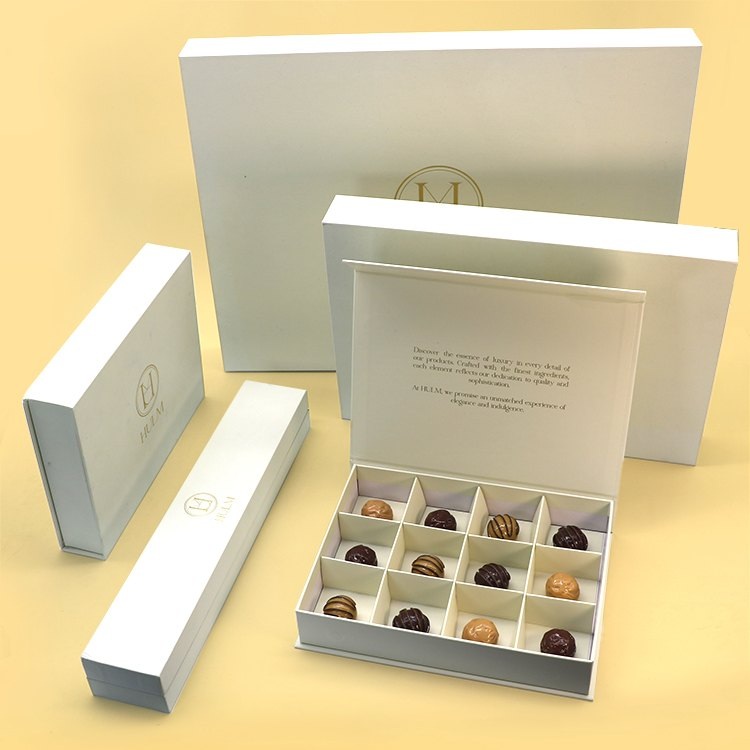
A chocolate assortment can make the opening part of the design
A gift assortment reveals its organization when the lid comes off. With each chocolate seated in an insert, your customer sees the arrangement you intended on opening the lid.
At JERL Packaging, we offer chocolate boxes with tray inserts as well as window and magnetic-closure formats. A window lets the assortment do some of the selling before opening. With a covered lid, the outside artwork has to introduce the gift on its own.
An insert must suit the actual selection. Seat the round truffle and the long filled chocolate in a sample tray, using real pieces or dimensionally accurate substitutes. Lift each out to see whether fingers can reach it and release it cleanly. Check the spare space around it as well. Mark any required changes on the tray drawing.
A seasonal edition of your custom chocolate packaging may keep the same chocolates in the same arrangement. In that case, explore a sleeve for the seasonal message before replacing the structure.
Printing the message on the lid is another possibility, though it changes the box artwork itself. Price that specific version before assuming a saving. Changing the chocolates themselves may also change the tray fit and box requirements.
A window needs checking with the lid closed. If a broad tray edge dominates the opening, sketch a smaller window or shift it over the chocolates. Resolve that view before drawing its printed surround.
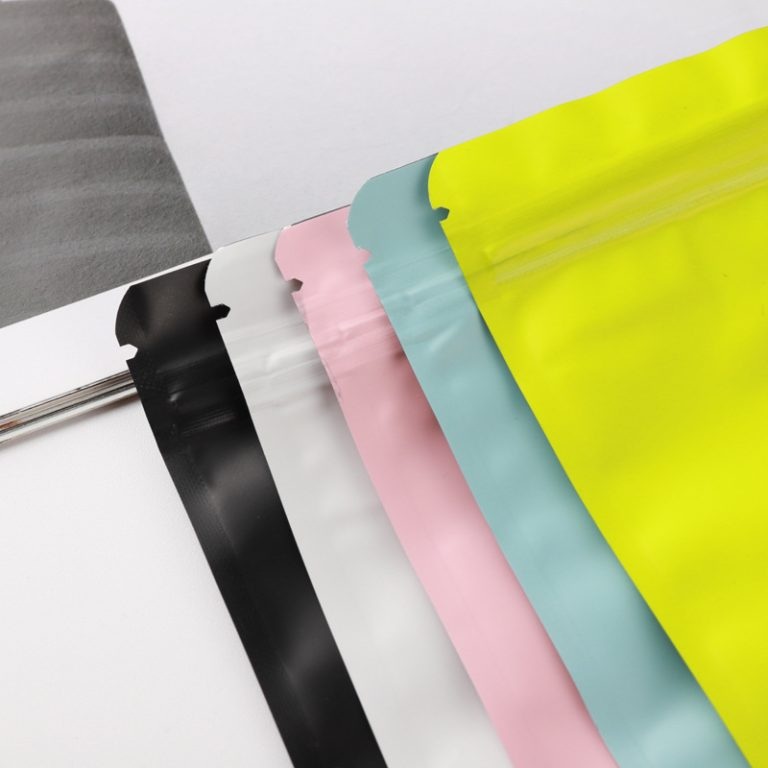
A snack pouch has to remain useful after opening
For a snack eaten over several sittings, the top of the pouch becomes a working part of the pack. Work through those actions on the sample. Once you have torn off the top, use the zipper repeatedly and look at the area available to grip. Leave enough room around both features for fingers and for readable artwork.
We offer Mylar pouches within our flexible food packaging range, with choices of zipper, window and surface finish. We list Mylar thickness options of 20–180 microns. That is a range from which a pouch can be specified, with no shelf-life duration attached. Material structure, seals and the food itself still need evaluation.
A pouch proof should be viewed filled. The gusset opens, the front changes shape and a low graphic may disappear into a fold. Position the flavor identifier on the part that remains visible in the intended display. For an online product image, check whether the same identifier survives at thumbnail size.
Window placement introduces another choice. A proposed window needs input from your food technical team about light exposure. That input determines whether the proposed visible area is appropriate. Reclosure also belongs in the product evaluation. Opening a sealed pouch and pressing its zipper closed creates a different condition from the unopened pack.
The food-contact layer sets limits on the artwork
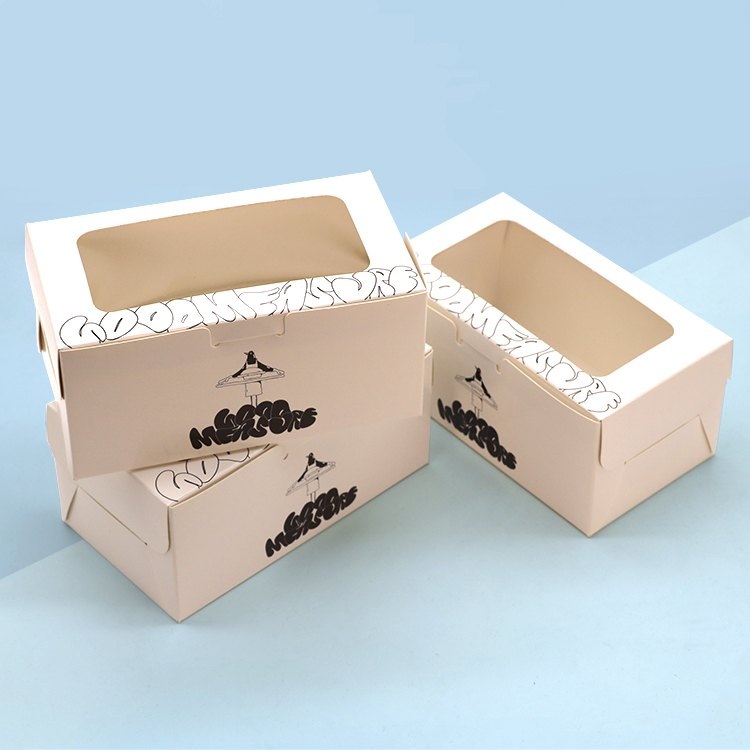
A printed gift box and the material touching the food have different responsibilities. Your outer carton may provide the brand presentation while a separate inner pack contains the product. On your sample, identify the surface that actually touches the food. Keep that distinction visible during artwork review.
For the US market, FDA guidance looks at the individual substances making up a food-contact article and the use intended for those substances. A general claim of “food grade” is therefore too broad to settle every application. Confirm the applicable basis for the actual materials and use conditions rather than extending an outer-box claim to an inner tray.
The sample review should connect the layers again. Follow the label through opening and unpacking. Does needed information leave with the sleeve? Does a folded inner wrapper cover the flavor name? Work out where those details belong on the assembled pack. Keep this exercise focused on where information appears. It cannot establish laboratory performance or regulatory compliance.
Keep the brand familiar while the format changes
Your branded food packaging needs a few decisions your team can reuse. Keep the visual cue that identifies the range, then adapt the structure to the food and the way it will be opened. A gift assortment and a snack pouch have different tasks, even when the graphics connect. Set the food-contact and protection requirements before approving either.
We can help develop the box, bag and supporting accessories around that brief at JERL Packaging.
Häufig gestellte Fragen
Must every flavor use the same box size?
No. Keep the visual hierarchy consistent where practical, but size each pack around its contents. Matching exterior dimensions is less useful when the food no longer fits properly.
Can a seasonal sleeve work on an existing pack?
Yes, if it fits the finished pack and leaves required information accessible. Try the pack without its sleeve during approval, since your customer may discard that part first.
Is a magnetic chocolate box a shipping container?
A magnetic closure describes how the presentation box closes. It does not establish shipping protection. Assess the proposed shipment as a whole. An outer carton, for example, belongs in that assessment with the presentation box inside.
Does a thicker pouch guarantee longer shelf life?
No. Validate the food and the sealed pack together under the intended storage conditions. Record the material structure and seal details as well as thickness, so the result belongs to an identifiable packaging specification.
How can a small brand avoid redesigning everything?
Make a short design reference showing logo placement and flavor-name treatment. Apply it to the next format and judge the filled pack. Flat artwork alone won’t show what a fold hides.


