Modern watch packaging has to do more than look expensive. It must hold the exact watch securely, communicate the line’s position, work in the intended sales channel, and remain consistent when several models share a launch. The best result comes from treating the box, insert, watch, and retail program as one design system rather than approving the outer shell on appearance alone.
The watch range defines the packaging system
A packaging program begins with the products that must fit it. Case diameter is only one input. Crown projection, lug-to-lug length, case thickness, bracelet clasp, strap stiffness, and any extra strap or tool all affect the space around the watch. A complete product envelope gives the designer a reliable boundary for the cavity and the removal path.
The design also needs a stated display position. Brands should define dial angle, logo orientation, crown direction, strap condition, and how the buyer lifts the watch. These details turn watch packaging box design into an observable fit decision instead of a subjective styling review.
One format rarely serves every sales moment
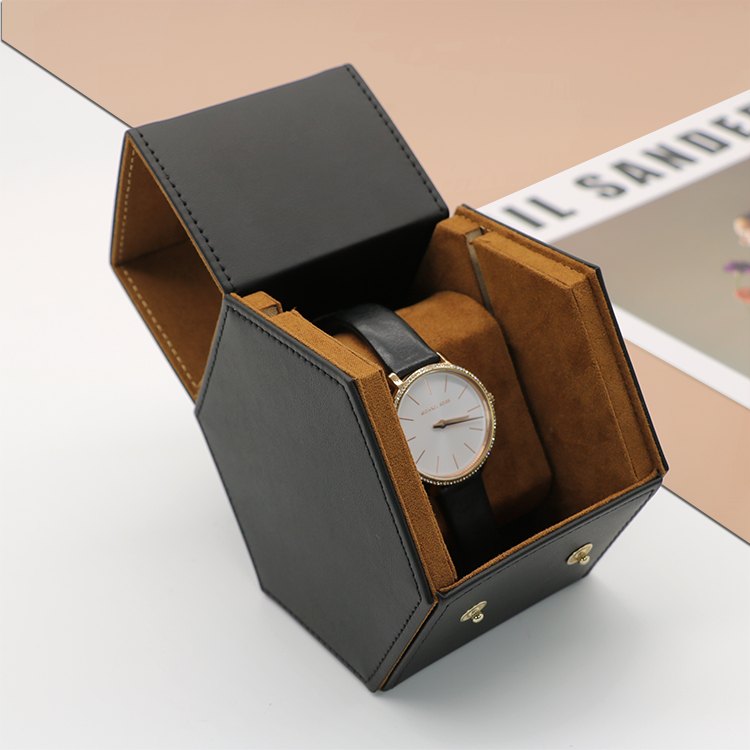
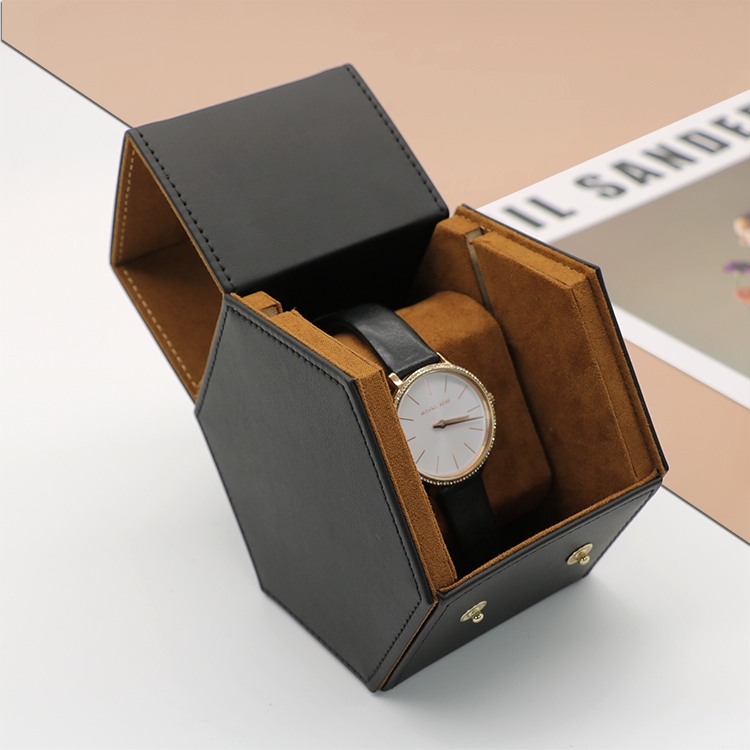
Format selection follows the sales moment because a single-watch gift, a collector set, and a travel product create different handling needs. JERL Packaging’s watch range includes PU watch boxes, wooden watch boxes, multi-watch storage formats, and roll-style travel cases. The useful comparison is therefore functional, not a simple luxury ranking.
| Format | Best fit | Design priority | Main tradeoff |
| Single PU or leather presentation box | Retail gift or one premium watch | Centered dial and clean removal | A model-specific cushion may limit sharing across sizes |
| Wooden display or storage box | Collector set or multi-watch range | Compartment consistency and hardware action | Larger volume can increase storage and shipping demands |
| PU roll or travel case | Travel, service kits, or compact sets | Separation between watch heads and straps | Flexible walls need deliberate contact control |
A modern range can use more than one format while retaining a common graphic language. That approach lets the package fit its job without making the brand look fragmented across retail, gifting, and travel uses.
Insert geometry converts appearance into protection
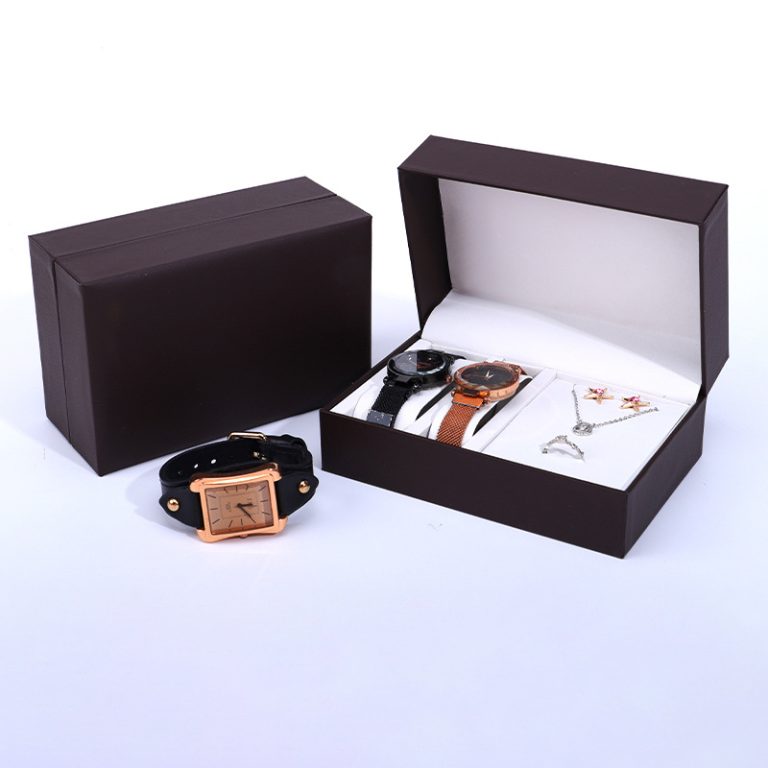
Insert geometry decides whether a polished box actually performs. The watch should remain centered during normal handling without loading the crystal, crown, clasp, or finished strap. Clearance must be checked after the final covering is applied because fabric, paper wrapping, and edge folds can tighten a cavity that seemed acceptable in bare foam.
A shared insert deserves testing with the smallest and largest models in the planned range. Unused space should be controlled rather than hidden, and accessories need their own pockets or zones. Otherwise, a loose tool or spare strap can contact the watch even when the main cushion fits correctly.
Materials should match the product promise
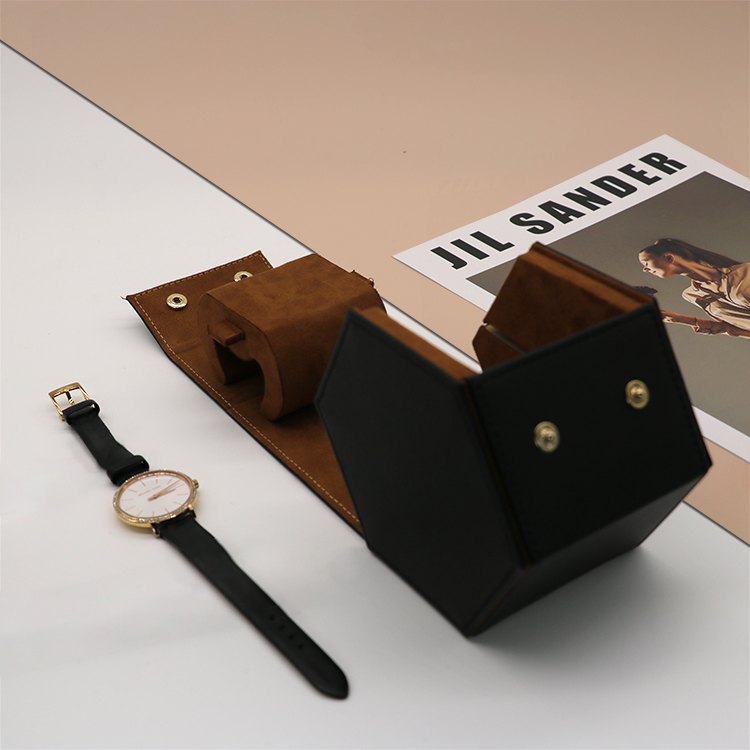
Material choice changes both perception and use. The watch catalog documents PU and wooden model families, while the current product range also includes paper structures and soft-lined interiors. A leather box for watches can support a classic gift position through stitched surfaces and a soft insert, whereas a wooden box suits a lasting display or collector role.
Finishes should reinforce the intended message instead of competing with the watch. Embossing, foil stamping, metal logo plates, matte surfaces, and controlled color contrast can signal quality with less visual noise. Material edges, hinge action, lining contact, and closure alignment matter as much as the chosen finish because customers handle those details directly.
Graphic hierarchy keeps the assortment coherent
A coherent range uses a small set of repeatable visual rules. Logo position, color hierarchy, type scale, lining tone, and opening orientation can stay consistent even when box sizes change. This gives entry, core, and premium models a family resemblance without forcing them into the same structure.
SKU differences should remain easy to identify in the warehouse and at retail. A discreet color code, sleeve label, or underside identifier can separate models without disturbing the front-facing presentation. The goal is to reduce picking errors while keeping the customer view deliberate.
Sampling turns a concept into a repeatable program
Sample approval should use written checks rather than comments such as ‘looks good.’ Teams can record centering, retention, contact points, removal, closure action, logo placement, and accessory presence. Photos of the approved display position and a signed physical sample then become references for production inspection.
JERL Packaging lists flat-view, 3D mock-up, and physical sampling options for watch-box projects, with a stated sample time of 2-3 working days and mass-production time of 10-15 working days for the cited leather model. Buyers sourcing custom watch boxes wholesale should confirm the timing, quantity, material, and distribution test plan for the exact selected configuration rather than applying one page’s details to every model.
The decision that keeps modern packaging credible
Modern watch packaging succeeds when the format follows the sales moment, the insert follows the product envelope, and the graphic system follows the brand range. That sequence prevents an attractive box from creating fit problems or portfolio inconsistency. A retail team can move forward once it has selected the right format, documented measurable fit criteria, and approved a production reference.
For a program-specific box and sampling plan, share the watch range, intended display position, target quantity, accessories, and distribution route with JERL Packaging.
Häufig gestellte Fragen
Which measurements matter most for a watch box?
Record maximum case width, crown projection, case thickness, lug-to-lug length, total packed length, and the largest strap or bracelet condition. Add accessory dimensions and the intended display position so the insert reflects the complete packed product.
Can one insert fit several watch models?
One insert can serve several models when the smallest and largest versions both pass retention, contact, and removal checks. The approval should show how extra space is managed and where each watch may touch the finished covering.
When is a wooden watch box the better option?
A wooden box suits products intended for long-term display, collector storage, or a substantial premium presentation. Its larger volume and hardware requirements should still be checked against storage, shipping, and retail handling needs.
What should a sample approval record include?
The record should include the approved watch variants, measurements, display photos, insert and material specifications, artwork version, closure and removal checks, accessory count, and clear rejection criteria. Retain the signed physical sample for comparison.
Does a good insert fit prove the package is ready to ship?
No. Insert fit controls the watch inside the presentation box. Transit readiness must be checked on the complete packed product using a procedure suited to the actual parcel, pallet, or international distribution route.