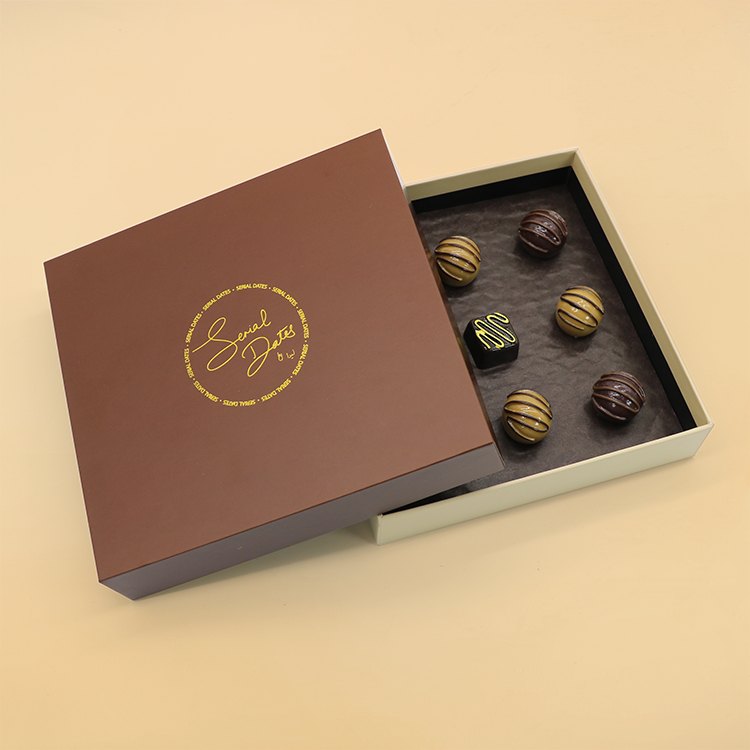
Food packaging earns attention only after it has kept the product intact. A memorable color or window cannot rescue crushed pastries, migrating grease, or loose pieces that arrive in disorder. For wholesale brands, the practical goal is a coordinated pack system: the food-contact layer manages freshness and hygiene, while the outer paper box protects the format, presents required information, and creates a visual cue buyers can recognize again.
Protection Begins With the Product Failure Mode
Each food creates a different packaging problem. Dry cookies may lose texture when the barrier is wrong, fatty bakery items can mark untreated paper, and delicate confectionery can fracture when pieces move. The design brief should name the food, fill temperature, storage conditions, shelf-life target, handling route, and whether the printed box touches the food or surrounds a separate sealed pack.
Food-contact status depends on intended use, not on a broad material label. In the United States, substances that contact food must have an applicable regulatory basis for the specific food type and conditions of use. EU Regulation (EC) No 1935/2004 similarly requires contact materials to remain sufficiently inert under normal or foreseeable use. Buyers should confirm the complete contact layer, including coatings, adhesives, inks, and windows.
The Box and Barrier Perform Different Jobs
Well-designed food packaging boxes separate freshness control from presentation when the printed paperboard is not the primary barrier. A sealed pouch, food-contact tray, liner, or approved coated board can manage direct exposure. The outer box then provides stacking strength, printable area, tamper-evident construction where specified, and a controlled opening sequence.
This separation prevents a common design error: asking decorative paperboard to prove moisture, oxygen, aroma, or grease performance that has not been tested. It also lets a brand change graphics without automatically changing the validated contact system. The final specification should state which component supplies each function so converters, fillers, and quality teams evaluate the same pack.
Fit Turns a Protective Concept Into a Stable Pack
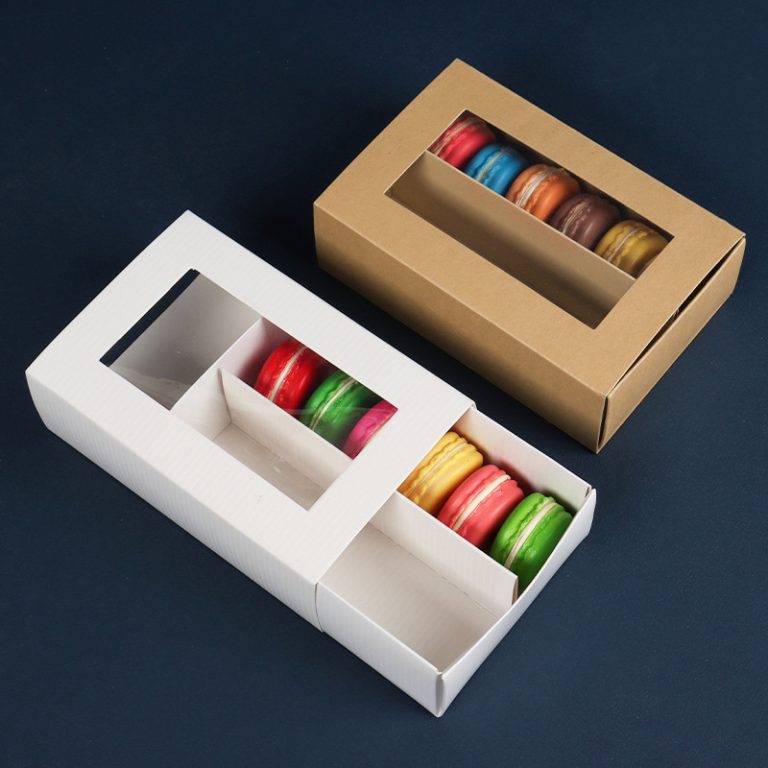
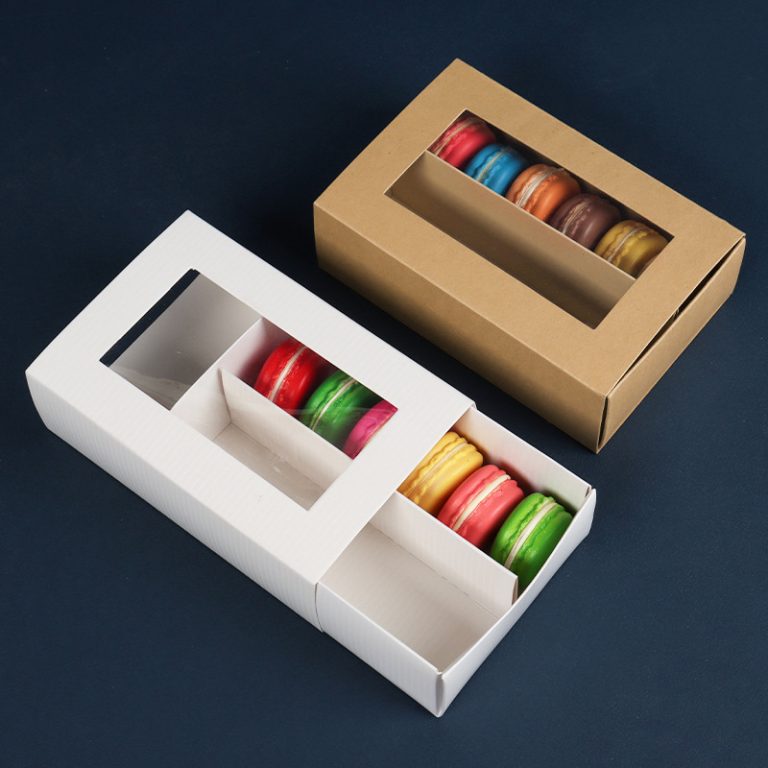
Movement inside the box converts small shocks into broken edges and messy presentation. Fitted cavities, dividers, trays, or sleeves should restrain the product without squeezing fragile surfaces. For custom snack boxes, the right headspace also keeps a clear window from rubbing toppings or decorations during stacking and delivery.
JERL Packaging can customize paper material, dimensions, window shape, printing, logo placement, and internal structure for bakery and snack applications. Those choices should start with measured product tolerances and the intended pack count. A layout that presents six macarons neatly may need different partitions from a mixed snack assortment, even when both use the same outside footprint.
Recognition Comes From a Consistent Visual System
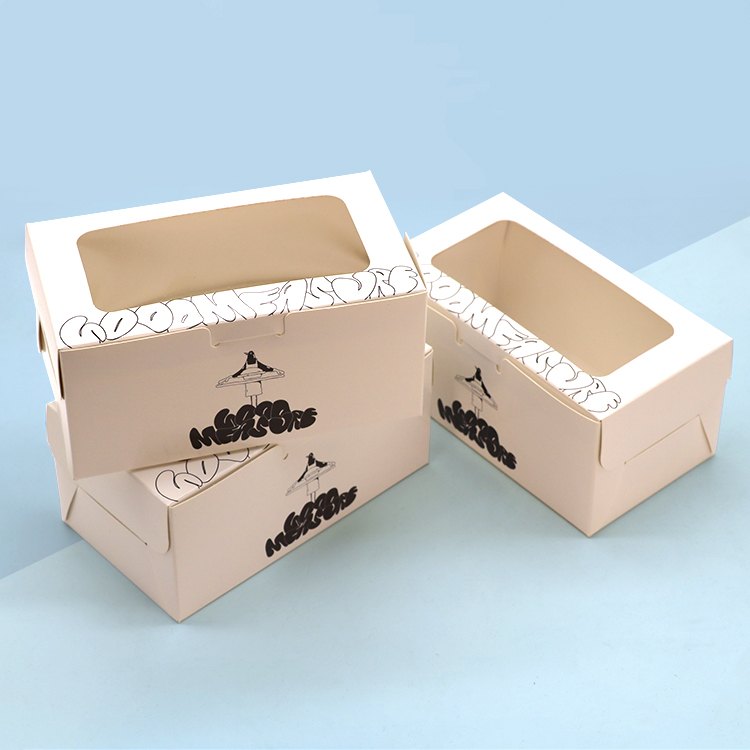
Memorability grows through repetition, not decoration density. A brand can own one dominant color relationship, a recognizable front-panel composition, a consistent logo zone, or a distinctive reveal when the lid opens. These elements should work at thumbnail size online, at arm’s length on a shelf, and on the side panel that remains visible in a shipping carton.
A repeatable system also controls production variation. Use a stable hierarchy for product name, flavor, quantity, storage guidance, and required declarations, then reserve flexible areas for seasonal graphics. The pack remains recognizable while artwork changes. A window can become part of that system when its shape frames the food clearly and does not weaken the panel or expose the product to unsuitable light.
Finishes Must Stay Inside the Contact Boundary
Finishes should reinforce one memorable cue while respecting the pack’s functional layers. JERL’s listed options for outer cardboard food packaging include custom print, matte or gloss lamination, foil, spot UV, and embossing. Their suitability still depends on placement, food type, storage, and the approved construction.
One focal finish is usually easier to control than several competing effects. Foil on a logo, an embossed pattern on a lid, or a clear window around the product can create recognition without covering every surface. The proofing stage should check color under retail lighting, small-text legibility, scuffing at folds, window adhesion, and any visible change after cold or humid storage.
Prototype Tests Should Recreate the Real Route
A prototype should be packed with the actual product or an accurate weight-and-shape substitute. Teams can then inspect closure security, divider movement, grease marks, window fogging, print abrasion, stack behavior, and opening ease. Parcel, pallet, retail, and takeaway routes create different hazards, so a generic drop test is weaker than a documented test plan matched to the distribution route.
ISTA provides route-specific procedures for packaged-product testing; Procedure 3A addresses individual parcels up to 70 kg. The selected procedure and acceptance criteria should reflect the real shipment, not serve as a decorative certification claim. For JERL’s windowed food paper box, the listed schedule is five working days for samples and 10 to 15 days for production, subject to quantity, which gives buyers a concrete point for planning approval rounds.
A Memorable Pack Makes Its Protection Visible
The strongest food package lets shoppers understand the product quickly and lets operations handle it confidently. Begin with the food’s failure mode, assign barrier and structural jobs to the correct layers, fit the contents, then build a repeatable visual cue around that proven construction. This order protects both the product and the brand promise because the memorable moment arrives in the condition the designer intended.
JERL Packaging can turn product dimensions, contact-layer requirements, route conditions, and artwork into a paper-box prototype for review before a wholesale production run.
Часто задаваемые вопросы
What makes food packaging protective
Protective food packaging matches the barrier, box structure, closure, and internal fit to the food and its route. It controls relevant risks such as moisture transfer, grease, movement, compression, and handling while keeping the required contact materials suitable for their intended use.
Can a paper box touch food directly
A paper box can contact food only when the complete construction is suitable and authorized for that food and use condition. Paper type alone is not enough. Buyers must verify coatings, recycled content, adhesives, inks, windows, temperature, fat content, and storage conditions.
Do windows weaken a food box
A window removes part of a paperboard panel and adds an adhesive joint, so its size and position can affect stiffness. A well-engineered window leaves adequate material around folds and load paths, uses a compatible film, and is tested with the filled product.
How should fragile snacks be arranged
Fragile snacks need enough restraint to limit collisions without creating pressure points. Dividers, trays, sleeves, or individual cavities should follow the actual dimensions and tolerances. The loaded prototype should then be checked after the intended handling and transport sequence.
When should a food packaging prototype be retested
Retest when the food format, pack count, board, barrier, insert, closure, window, outer shipper, filling process, or distribution route changes. These changes can alter protection even when the artwork and outside dimensions appear nearly identical.