
Hold a piece of jewelry the way a customer does, and the first thing you notice is not the stone but the box under it. A premium line lives or dies on that half-second. The strong luxury jewelry boxes decide structure, materials and the brand mark together, so the whole thing reads as one considered object. Here is what that means for a 2026 line, and how to brief it for a wholesale run.
The unboxing moment that sells
People judge a box in the act of opening it. The lid lifts, the drawer slides, and for a moment the only things visible are the edges, the color, and how the piece is sitting. If any of those looks off, the buyer files the item as less valuable than it is, well before reading your name on the box.
Two things drive it. The structure decides whether the piece sits exactly where you want it, and the finish decides how the box itself reads. A drawer that opens smoothly and reveals a centered ring feels expensive; the same ring in a flimsy carton feels like a sample.
Structure that holds the piece
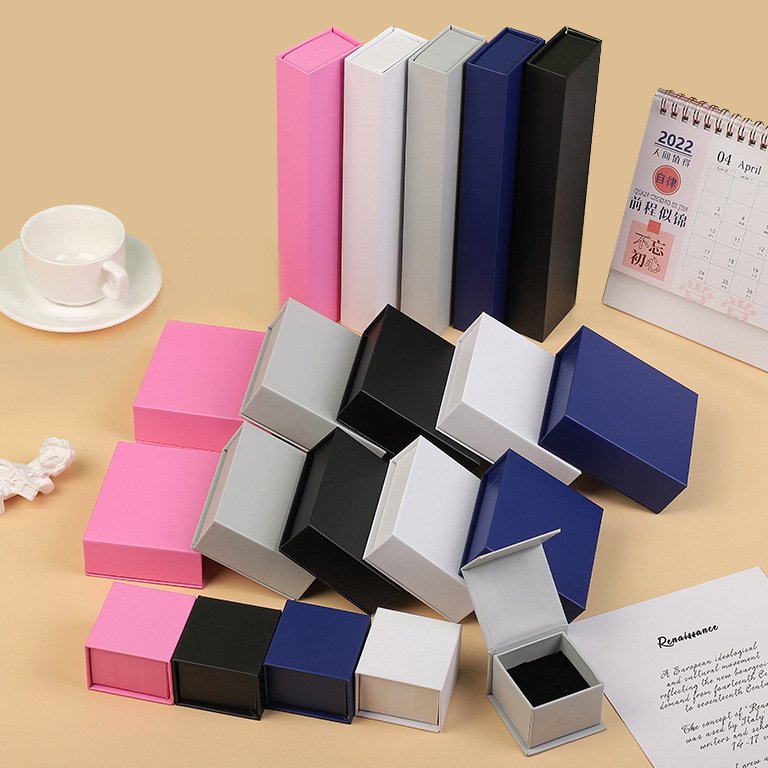
Before anything pretty, a jewelry box is a small structure that has to do a job. The item needs to sit tight enough to make it through a gift bag, a shipping carton and a retail shelf, then pop out cleanly for the customer. A book-style opening with a magnetic closure is a good example: the interior stays protected, but the reveal keeps a slow, deliberate feel.
Inside, the real work is making space. An insert cut to the piece keeps a ring or pendant from sliding, and the walls hold their shape so the box still looks new after a month of handling. Set the dimensions and internal structure at the start of the brief and the fit stays the same from unit one to five hundred, instead of drifting.
This is the point where custom jewelry boxes with logo pull their weight. A rigid body gives the box a solid, high-end look that holds up over time, which is exactly what a perception-driven brand asks the packaging to do.
Materials and finishes that read as premium
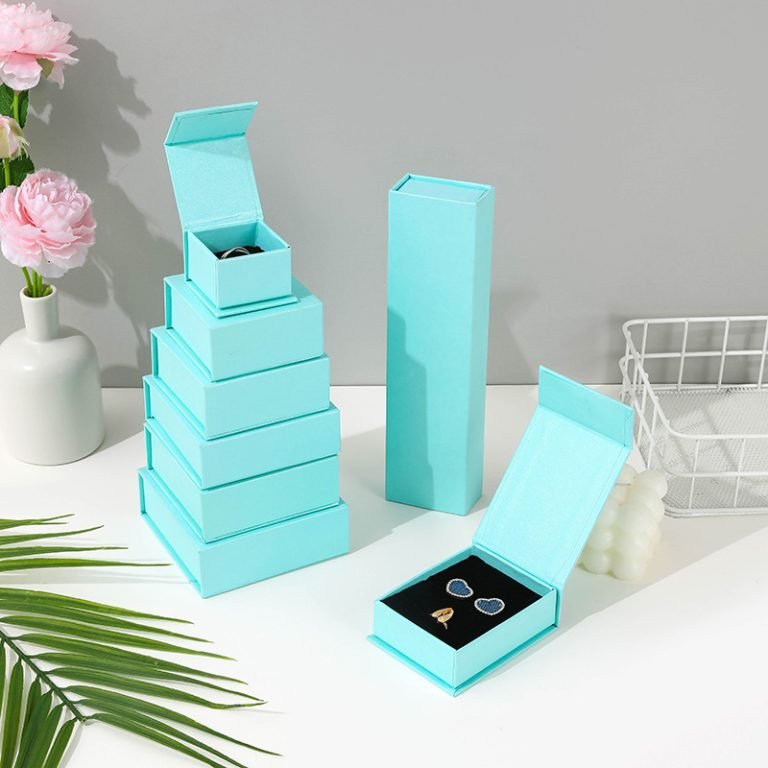
With the structure sorted, materials start doing the talking. You can step from premium paper and rigid board up through velvet and leather, and each one changes how the box feels in the hand. A velvet or leather interior does quiet selling: it makes the piece feel cared for without a printed word.
Finishing is the second layer. Lamination, foil stamping, embossing, soft-touch coating and spot UV all change the way light sits on the surface, and that is the trick to a box that looks costly at arm’s length. On velvet jewelry packaging, the finish and the interior texture should feel like one choice, not two products boxed together.
The trap is doing too much. Restraint is what reads as luxury. One strong finish can carry the whole box, while a surface covered in effects looks busy and undercuts the piece it holds. Pick the few touches that matter and leave the rest clean.
The logo and color detail that carries the brand
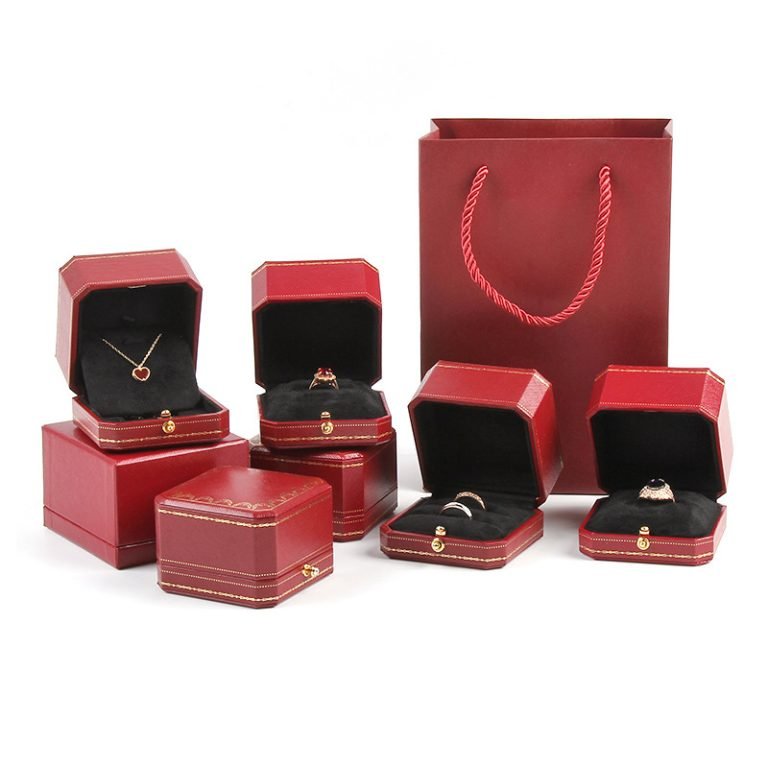
The brand mark has to show up without shouting. A logo in the right position, a consistent color, and a printing method that suits the surface turn a plain box into one people recognize on a shelf. It is a small detail, but it is the part a customer photographs and remembers.
When the brief pins down the logo position, color palette and printing together, the result stays on-brand from the first sample to the last carton. That consistency is the line between a box that just holds the piece and one that sells the collection.
Set and drawer formats for a full line
One ring box is rarely the whole job. If a brand sells a range, it needs formats that scale: set boxes, drawer styles and bigger multi-item presentations that keep every piece in its own place while still reading as one collection. A drawer opening to a matched set tells a fuller story than a row of identical single boxes.
These formats are also what make a line look deliberate. When the ring, necklace and bracelet each sit in a matching structure, the customer sees a system, not a pile of separate decisions. jewellery ring boxes wholesale are a typical first step for a brand building that coordinated look.
From sample to a branded wholesale run
A design that works on one sample still has to survive an order of hundreds. The process that keeps it there is unglamorous but reliable: lay out the requirements and design drafts, agree the quote, build a prototype for approval, then produce and ship once the sample is confirmed.
Sticking to that order means the structure, materials and finish you signed off on are the ones that leave the factory. Add quality checks from the incoming materials through every stage and a final inspection before anything ships, and a branded run stays consistent at scale.
What a 2026 luxury box brief needs
The brief for a luxury box has quietly changed from describing a container to describing an experience. Spell out the structure that holds the piece, the materials and finishes that carry the look, the logo and color that carry the name, and the formats that cover the range. Then verify all of it on a real sample before the run is released.
Get those four right and the box stops being packaging and starts doing the selling. custom cardboard jewelry boxes behave best when the brief treats them as one system rather than a parts list. Planning a premium line? JERL Packaging can build the box around your pieces and your brand mark.
Perguntas frequentes
What makes a jewelry box feel luxury?
It comes down to a structure that holds the piece cleanly, materials and finishes that read as premium, and a brand mark used with restraint. The box should present the jewelry, not fight it for attention.
Can a jewelry box be customized with our brand logo?
Yes. Custom jewelry boxes can carry your logo, color and design, and the logo position and printing method can be set in the brief so the result stays on-brand from sample to carton.
What is the difference between a rigid box and a standard carton?
A rigid box keeps its shape and presents the piece with a stronger, high-end look, while a standard carton is lighter and built more for bulk shipping. Rigid is the usual pick when the box is meant to be kept.
How do we move from a sample to a full order?
Confirm the requirements and design drafts, agree the quote, approve a prototype, then move to production and delivery after the sample is confirmed, with checks at each step.
Can we order a set or drawer format for a whole collection?
Yes. Set boxes and drawer formats let a brand present a full line as one coordinated system, keeping each piece defined while the collection reads together.


